Firm vs Soft Mattress: Which Should I Choose? The Science-Based Answer
Share
Fact checked
Reviewed by experts
 Writers at Sleep Authority are supported by a research team conducting in-depth research about the topics. The editorial team reviews them for accuracy and facts to ensure the most authentic and accurate content is published. Sleep Authority does not offer any medical advice, and you should not rely solely on our content for your course of treatment. Consult your medical professional to discuss any health concerns, chronic conditions, treatment options, or diagnoses.
Updated
November 17, 2025
Quick read
9 mins to read
List of Content
The firmness of your mattress directly impacts spinal alignment, pressure relief, and overall sleep quality – and still, choosing between firm and soft remains one of the most confusing decisions when it comes to mattress shopping. Here’s what sleep science tells us: neither firm nor soft is universally “better.” Your optimal firmness will on your body weight, preferred sleep position, and specific pain conditions. Most sleepers find their sweet spot in the medium to medium-firm range (5-7 on the 10-point firmness scale), which balances support with pressure relief.
This decision matters more than you might realize. A 2009 study published in Applied Ergonomics found that mattress firmness significantly affects your sleep quality, pain levels, and daytime functioning. The wrong firmness can exacerbate back pain, create pressure points that disrupt sleep, and even affect your body’s temperature regulation throughout the night. Understanding how firmness works, and how to match it with your specific needs, transforms this seemingly subjective choice into an evidence-based decision.
Understanding Mattress Firmness: What the Scale Really Means
Mattress firmness is measured on a 1-10 scale, where 1 represents the softest possible surface and 10 the firmest. Most consumer mattresses fall between 3 and 8 on this scale. Plush mattresses typically rate 3-4, soft mattresses measure 4-5, medium sits at 5-6, medium-firm ranges from 6-7, and firm mattresses register 7-8. Extra firm options (8-10) are relatively rare in the consumer market, though they’ve become more popular in recent years.
The firmness you experience comes from the interaction between comfort layers and support cores. Comfort layers, typically made from memory foam, latex, or polyfoam, provide the initial “feel” and pressure relief. Support cores, often high-density foam or coil systems, maintain spinal alignment and prevent excessive sinkage. A mattress might have soft comfort layers over a firm support core, creating what manufacturers call “plush firm” or “luxury firm” feels.
It’s worth noting that firmness perception is subjective and influenced by body weight. A 130-pound person might experience a mattress as firm, while a 230-pound person finds the same mattress medium-soft. This weight-dependent perception occurs because heavier individuals compress mattress materials more deeply, engaging different layers of the construction. Temperature also affects perceived firmness: memory foam, for instance, becomes softer as it warms from body heat.
The Science of Sleep Support: How Firmness Affects Your Body
During sleep, your spine should maintain its natural S-curve, similar to your standing posture. This neutral alignment minimizes stress on vertebrae, discs, and surrounding muscles. Research from the European Spine Journal demonstrates that proper spinal alignment during sleep reduces morning pain and stiffness while improving sleep quality.
Pressure points, or areas where your body concentrates weight against the mattress, play an equally crucial role in sleep comfort. These typically occur at the shoulders, hips, and heels. When a mattress is too firm, these points bear excessive pressure, reducing blood flow and triggering position changes that fragment sleep. Conversely, insufficient firmness allows the body to sink too deeply, creating misalignment and strain.
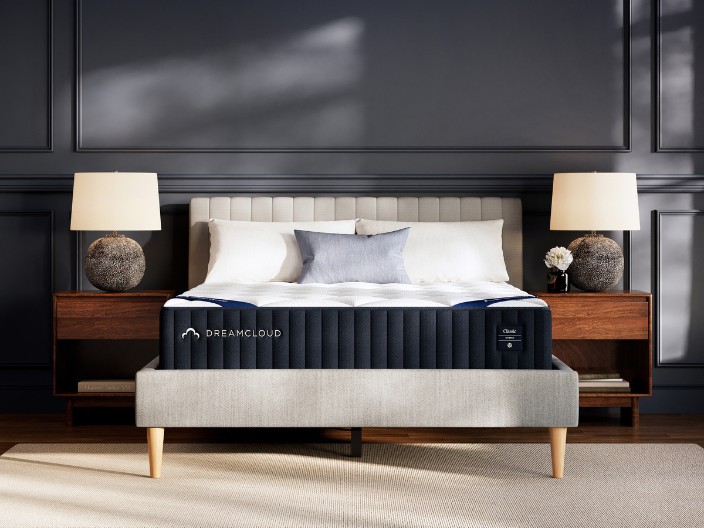
The relationship between firmness and pressure distribution explains why hybrid mattresses like DreamCloud have gained popularity. Their individually-wrapped coils provide targeted support while memory foam layers cushion pressure points. This combination allows different body regions to receive appropriate support levels simultaneously: firm support for the lumbar region, while allowing shoulders and hips to sink slightly for pressure relief.
Blood circulation during sleep depends significantly on pressure distribution. A 2008 study in Sleep Medicine found that interface pressure (the pressure between body and mattress) above certain thresholds triggers unconscious position changes. These micro-awakenings, while not remembered, accumulate to reduce sleep efficiency and increase next-day fatigue.
Firm Mattresses: Benefits, Drawbacks, and Ideal Sleepers
Firm mattresses (7-8 on the firmness scale) provide maximum support with minimal contouring. They maintain a relatively flat sleep surface, keeping the body elevated rather than cradled. This design particularly benefits stomach sleepers, whose hips need firm support to prevent lower back hyperextension. Back sleepers with higher body weights (over 230 pounds) also often prefer firm surfaces that prevent excessive sinkage in the midsection.
The primary advantage of firm mattresses lies in their consistent support. They facilitate easier position changes throughout the night — what sleep researchers call “ease of movement” — which benefits combination sleepers who shift between positions. Firm surfaces also tend to sleep cooler since the body remains on top of the mattress rather than sinking into potentially heat-trapping materials.
However, firm mattresses present challenges for certain sleepers. Side sleepers often experience inadequate pressure relief at the shoulders and hips, leading to numbness or discomfort. Individuals under 130 pounds may not compress firm materials enough to engage comfort layers, essentially sleeping “on” rather than “in” the mattress. This surface-level contact can create gaps at the lumbar region, failing to support the natural spine curve.
A fascinating 2003 study published in The Lancet challenged the long-held belief that firmer is always better for back pain. Researchers found that medium-firm mattresses actually outperformed firm ones for chronic lower-back pain sufferers, suggesting that some contouring is necessary – even for those requiring substantial support.
Soft and Plush Mattresses: Comfort, Concerns, and Best Applications
Soft mattresses (3-5 on the firmness scale) prioritize contouring and pressure relief over rigid support. They allow the body to sink into the sleep surface, creating a cradling sensation that many describe as sleeping “in” rather than “on” the bed. This deep contouring particularly benefits side sleepers, where pronounced shoulder and hip curves require accommodation to maintain spinal alignment.
The pressure-relieving properties of soft mattresses make them valuable for individuals with chronic pain conditions, particularly fibromyalgia or arthritis. The cushioning effect reduces stress on tender joints and pressure points. Lighter individuals (under 130 pounds) often find soft mattresses ideal since they don’t compress firmer materials sufficiently to access comfort layers.
Yet soft mattresses pose alignment challenges for certain sleepers. Stomach sleepers almost universally struggle on soft surfaces, as the hips sink too deeply, creating lower back strain. Heavier individuals (over 230 pounds) may experience inadequate support, with excessive sinkage leading to the “hammocking” effect where their spine curves unnaturally. This misalignment often manifests as morning back pain or stiffness.
Temperature regulation presents another consideration with soft mattresses. The deeper body impression creates more surface contact with the mattress materials, potentially trapping heat. This is why advanced cooling technologies become crucial in softer models. Nectar mattresses do a great job of addressing this challenge with specialized cooling covers that help dissipate heat even with the deeper contouring soft mattresses provide.
Body Weight Considerations: How Your Weight Affects Firmness Needs
Body weight fundamentally determines how you interact with mattress materials. Lightweight sleepers (under 130 pounds) generate less compression force, meaning they primarily engage upper comfort layers without significantly affecting deeper support layers. These individuals often require softer mattresses to achieve adequate contouring and pressure relief. A medium-firm mattress might feel uncomfortably rigid to a 120-pound sleeper, failing to conform to their body’s curves.
Average-weight sleepers (130-230 pounds) have the widest range of suitable firmness options. They compress mattress materials sufficiently to engage both comfort and transition layers while maintaining appropriate support. This weight range typically finds success with medium to medium-firm mattresses (5-7 on the firmness scale). The versatility explains why manufacturers design most mattresses to accommodate this demographic.
Heavier sleepers (over 230 pounds) require careful firmness selection to balance support with comfort. They compress mattress materials more deeply, potentially “bottoming out” on softer models where they push through comfort layers to the firm support core beneath. This creates an uncomfortable sleeping experience and accelerates mattress wear. Hybrid constructions with reinforced coil systems, like those in DreamCloud mattresses, provide the robust support heavier individuals need while maintaining comfort through specialized foam layers designed to accommodate greater compression forces.
Weight distribution patterns also matter. Athletic individuals with concentrated muscle mass may need firmer support than those with more evenly distributed weight, even at the same total body weight. Similarly, pregnancy changes both weight and weight distribution, often requiring temporary firmness adjustments. Many pregnant women find that medium-firm mattresses provide the best balance of support for their changing center of gravity while accommodating side sleeping, which becomes necessary in later trimesters.
Sleep Position and Firmness: Finding Your Perfect Match
Side Sleepers: The Pressure Relief Priority
Side sleeping, practiced by approximately 60% of adults, creates distinct pressure points at the shoulders and hips. These bony prominences bear significant weight concentration, requiring sufficient cushioning to prevent discomfort. Side sleepers typically thrive on soft to medium mattresses (4-6 on the firmness scale) that allow these areas to sink while supporting the midsection. The goal is creating a straight spine when viewed from behind—shoulders and hips sink equally while the waist receives support.
The challenge for side sleepers lies in balancing pressure relief with support. Too soft, and the spine curves laterally. Too firm, and pressure points develop, causing numbness or forcing position changes. Memory foam and latex excel for side sleepers due to their responsive contouring. This is where mattresses like Nectar truly shine—their multiple foam layers provide graduated support that adapts to the body’s curves while maintaining structural integrity.
Back Sleepers: The Support Seekers
Back sleepers need consistent support along the entire spine, with particular attention to maintaining the natural lumbar curve. Medium to medium-firm mattresses (5-7 on the firmness scale) typically serve back sleepers best, providing enough give to fill the lumbar gap while preventing excessive sinkage. The mattress should support the body’s natural S-curve without creating pressure points at the shoulders or tailbone.
Research indicates that back sleeping promotes optimal spinal alignment when properly supported. However, inadequate lumbar support can strain lower back muscles that work throughout the night to maintain posture. Zoned support systems, which provide targeted firmness variations across the mattress surface, particularly benefit back sleepers by offering firmer support in the midsection while allowing slight contouring at shoulders and legs.
Stomach Sleepers: The Firm Foundation Requirement
Stomach sleeping presents unique support challenges, as this position naturally stresses the lower back. The hips and abdomen, carrying significant body weight, tend to sink into softer mattresses, creating hyperextension in the lumbar spine. Stomach sleepers almost universally require firm to extra-firm mattresses (7-8+ on the firmness scale) that keep the hips elevated and aligned with the shoulders.
Beyond firmness requirements, stomach sleepers benefit from thin, low-loft pillows that prevent neck strain. The combination of firm mattress support and minimal pillow height maintains the most neutral spine position possible in this challenging sleep posture. Some stomach sleepers find success with hybrid mattresses featuring reinforced lumbar zones that provide extra support where it’s most needed.
Combination Sleepers: The Versatility Challenge
Combination sleepers, who shift between two or more positions nightly, need versatile support that accommodates varying pressure points and alignment needs. Medium to medium-firm mattresses (5.5-6.5 on the firmness scale) often provide the best compromise, offering enough softness for side sleeping comfort while maintaining support for back and stomach positions.
Responsive materials become crucial for combination sleepers. The mattress must quickly adapt to position changes without creating lasting impressions that interfere with subsequent positions. Latex and hybrid constructions excel here, providing instant response to movement. The individually-wrapped coils in DreamCloud’s hybrid design, for instance, independently adjust to body positioning, ensuring consistent support regardless of sleep position.
Special Considerations: Health Conditions and Firmness Selection
Chronic back pain sufferers often assume firmer is better, but research reveals a more nuanced reality. The aforementioned Lancet study found medium-firm mattresses (5.5-6.5 on the firmness scale) most effective for reducing back pain and improving sleep quality. This firmness level provides adequate support while allowing natural spine curves to be accommodated. The key lies in maintaining neutral alignment rather than forcing the spine into an unnaturally straight position.
Hip pain presents unique firmness challenges, particularly for side sleepers. The hip joint requires cushioning to prevent pressure buildup, yet excessive softness can create misalignment that exacerbates pain. Zoned support systems or mattresses with enhanced pressure relief in the hip region often provide the best solution. Memory foam’s ability to redistribute pressure makes it particularly valuable for hip pain sufferers.
Shoulder problems, including rotator cuff injuries or arthritis, significantly influence firmness needs. Side sleepers with shoulder issues often require softer surfaces that prevent pressure concentration on the affected joint. However, the mattress must still maintain enough support to prevent the shoulder from sinking so deeply that it creates neck misalignment. This delicate balance often leads shoulder pain sufferers toward medium-soft mattresses with robust support cores.
Fibromyalgia and other conditions causing widespread pain sensitivity typically respond better to softer, more conforming surfaces. The gentle cradling of memory foam or soft latex reduces pressure point formation that can trigger pain flares. However, these individuals must balance pain relief with adequate support to prevent secondary issues from poor alignment.
Temperature Regulation and Firmness: An Overlooked Connection
Firmness directly impacts sleep temperature through its effect on body positioning and material contact. Softer mattresses create more body contact with sleep surfaces, potentially trapping heat. The “hugging” sensation of soft memory foam, while comfortable, can inhibit air circulation around the body. Firmer mattresses keep sleepers more elevated, allowing better airflow but potentially creating pressure points that trigger position changes and sleep disruption.
Material composition interacts with firmness to affect temperature. Traditional memory foam softens with heat, creating a cycle where warmth increases softness, which increases heat retention. Modern solutions include gel infusions, phase-change materials, and enhanced airflow designs. This is a big reason why we love Nectar’s approach—their cooling technology specifically addresses the heat retention traditionally associated with conforming memory foam, making softer firmness levels more accessible to hot sleepers.
For naturally warm sleepers, medium-firm mattresses often provide the best temperature balance. They offer enough elevation to promote airflow while still providing comfort. Hybrid mattresses excel in temperature regulation regardless of firmness, as coil layers promote air circulation throughout the mattress core. The open structure of individually-wrapped coils creates natural ventilation channels that help dissipate body heat.
Making Your Decision: A Systematic Approach to Choosing Firmness
Start your firmness selection by honestly assessing your primary sleep position. While you might occasionally change positions, most people have a dominant posture they return to throughout the night. This primary position should guide your initial firmness range: side sleepers toward soft-medium (4-6), back sleepers toward medium-firm (5-7), and stomach sleepers toward firm (7-8).
Next, adjust for body weight. Lighter individuals should consider one level softer than their position suggests, while heavier sleepers might need one level firmer. A 250-pound back sleeper, for instance, might need a firm mattress (7-8) rather than the typical medium-firm recommendation. Conversely, a 110-pound side sleeper might find optimal comfort in a soft mattress (3-4) rather than medium-soft.
Consider any pain conditions or physical limitations. Chronic pain often benefits from slightly softer surfaces that provide pressure relief, though not so soft that support is compromised.
This website does not offer medical advice nor professional medical services; rather, it is provided solely for educational, informational, and/or entertainment purposes. Individuals seeking medical advice should consult a licensed physician. The information provided should not be used for diagnosis or treatment of any condition, disease, or injury. When you have a medical condition, you should always talk to licensed doctor or other certified medical professional. You should never delay seeking professional medical advice or treatment based on the contents of this website. Call 911 or immediately go to the nearest emergency room if you think you may have a medical emergency. The contents of this website are provided “as-is”, Sleep Authority and its parent, subsidiaries, affiliates, employees, contributors disclaim any warranty of the information contained herein. Please contact using contact form to report any errors, omissions, misinformation, or abuse.